Photos from L.L. Prasanna Ranatunga. More photos on his facebook page https://www.facebook.com/WildlifesafariTour
www.WilpattuHouse.com
News and Tips
WilpattuHouse is not just a tranquil, rustic no frills nature stay.
It is also a agriculture enterprise that attempts to tryout new techniques. The blog is to share such techniques and ideas.
Budget Travel Tips too.
Friday, April 22, 2016
Thursday, April 21, 2016
East Coast Road in Jaffna Peninsula
![]() |
| Chundikulam Sanctuary Lagoon |
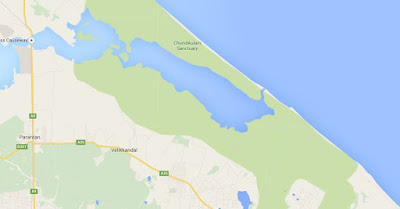
Bad news: Maybe in SUV with a snorkel or trail motor bike. As Olivier and Benoît (from France) say: The lagoon of Chundikulam Sanctuary, we have to pass in the ocean, no beach road at this season (NE Monsoon).
Maybe possible to cross in May-Oct season.
Related: Crossing Kokilai Lagoon
Friday, March 18, 2016
Flawed Analysis: Prof. Dharmawardana on CKDu and Glyposate
Prof. Dharmawardana has an article that dismisses links between CKDu, glyphosate and chemical fertilizers. However this analysis is severely flawed.
To quote Prof. Dharmawardana:
The flawed analysis of Prof. Dharmawardana ignores
a) New Zealand has high rainfall and rural communities use rain water collected from roofs for drinking purposes.
b) Sri Lanka does not have a CKDu problem is the wet zone.
c) Jaffna which has hard ground water has low incidence of CKDu because agro chemicals were prohibited during the war.
Related Links
Groundwater Depletion, Chronic Kidney Disease (CKDu) and Jaffna .
To quote Prof. Dharmawardana:
New Zealand is one of the biggest users of synthetic fertilizer, applying 1700 kg/hectare in 2012. Other comparative figures (per hectare, World Bank data) are, Malaysia,1600, Singapore 3400, Holland 300, India 165, Sri Lanka 198, Nicaragua 50. Both Nicaragua and Sri Lanka have chronic kidney disease of unknown origin (CKDu). There are similar trends for glyphosate (herbicide) use. While Nicaragua uses very little fertilizer and glyphosate, New Zealand which uses more than 34 times has no CKDu.The proposed link (e.g. Jayasumana et al (2014) ) is between hard (Ca++ and Mg++) ground water used for drinking and glyphosate and chemical fertilizer use in surrounding areas.
The flawed analysis of Prof. Dharmawardana ignores
a) New Zealand has high rainfall and rural communities use rain water collected from roofs for drinking purposes.
b) Sri Lanka does not have a CKDu problem is the wet zone.
c) Jaffna which has hard ground water has low incidence of CKDu because agro chemicals were prohibited during the war.
Related Links
Groundwater Depletion, Chronic Kidney Disease (CKDu) and Jaffna .
Monday, March 14, 2016
Is Ranil Wickremesinghe planning to send Colombo Garbage to Wilpattu
![]() |
| Kala-Oya/Lunu-Ela 200m away from proposed Garbage site |
The surrounding area of the proposed garbage site is pristine Mangroves and the beautiful Kala-Oya. Maybe the animals and fish do not have a vote, whereas Kolonnawa is a large vote bank for Ranil Wickremesinghe. The idea is that garbage sites should be in less populous areas – not in residential areas. i.e. Send the garbage to where there are more animals than people.
The Colombo Garbage to Wilpattu has been revived and is about to be approved. Rumors have it that the Wildlife Dept was obstructing the approval. A change in Wildlife Dept leadership is planned and will approve the Garbage site adjacent to Wilpattu National Park and the beautiful Kala-Oya. Large amount of toxic chemical leachate (7 bowser loads, every day for at least 20 years) will end up in the Kala-Oya and the Puttalan Lagoon which is a enclose environment. (See Colombo Garbage to Wilpattu and Update: Colombo Garbage to Wilpattu and Suggestions: Colombo Garbage to Wilpattu)
The reason for all the chemical ending in the Lunu-Oya and Kala-Oya is because the underlying ground is limestone and very porous. Additionally the limestone and the High Density Polyethylene (HDPE) will crack because of blasting in the nearby active Holcim Quarry.
However, disposal to the Lunu Oya is not a good solution due to its almost stagnant nature. Furthermore, the proposed effluent treatment plant is likely to fail, with no mechanism to remove colloidals, COD and heavy metals, etc.
Therefore, releasing the effluent from the treatment plant to the Lunu Oya would result in intense pollution especially during the drier spells when discharge is very low due to high evapotranspiration and the leachate pollution would even spread to upstream areas (up to the zone of saline water intrusion) during the high tides.
The reduced, total organic carbon (TOC) rich mangrove sediments would become a crucial sink for the heavy metals due to adsorption and sulfate reducing bacteria (SRB) mediated dissimilatory SO42- reduction mechanisms; however, ingestion of contaminated sediments/detritus matter by bottom dwelling fauna wouldultimately result in bioaccumulation in higher trophic levelfaunal species such as Birds of Prey which are found inplenty due to the close proximity of the landfill site to the Wilpattu National Park (about 1.5 km to the boundary of the park, which is located towards the East of the landfillsite), one of Sri Lanka’s Ramsar wetlands. Also during high tidal events when there is saline water intrusion, there could be desorption of sediment adsorbed metals due to intense competition between Na? ions and metal ions for adsorption sites, resulting in an increased likelihood of the bioavailability of desorbed metals to fish, etc. in the long run considering that the Project area experiences a drier climate
However, operation of the nearby potential quarry sites (i.e., the Eluwankulama Forest; Fig. 1) for limestone extraction by Holcim (Lanka) Ltd (for cement production) could pose a danger to the single composite liner. This is because higher peak particle velocities due to the usage of detonators and charging drilled holes with ammonium nitrate/fuel oil and dynamite may rupture the HDPE liner and perhaps the soil bentonite layer too, ultimately leading to groundwater contamination.
![]() |
| Map of Kala Oya and Garbage site. Click on Image for Google Maps |
Friday, October 16, 2015
Suggestions: Colombo Garbage to Wilpattu.
![]() |
| Perth, Australia. The materials used for land reclamation, included general household rubbish. |
Obviously I am critical of Garbage of Colombo shipped to a Landfill in the Wilpattu Buffer zone or for that matter to any interior part of the Sri Lanka. This is simply because the large amount of toxic chemical leachate (7 bowser loads, every day for at least 20 years) is trapped in an enclosed environment. (See Colombo Garbage to Wilpattu and Update: Colombo Garbage to Wilpattu)
In the case of the Wilpattu Buffer zone site, the leachate is trapped in the Kala-Oya/Lunu-Ela Estuary Complex and the Puttalam Lagoon. Tidal currents are clockwise (Coriolis force) in the Northern hemisphere. That means all the toxic chemicals are going to flow toward Puttalam town, and the longer the water stays (residence time), more of the chemicals will settle on to the bottom. These will then eaten by various organisms (shrimp etc) and end up in the bigger fish (food chain). The worst case is that all the chemicals use up all the oxygen (eutrophication) in the south end of the Lagoon. Then all fish will die, the lagoon covered with algae and a stink to high heaven (think Bolgoda in Colombo).
Any landfill site in the interior of Sri Lanka will similarly trap the leachate in groundwater sources for years in the future.
So what are my suggestions.
- Use the garbage to create Landfill for the proposed Colombo Port City
I am well aware that the leachate is going into the ocean. However, it is a much better choice than the leach contaminating and getting concentrated in closed environments such as Kala-Oya-Puttalam Lagoon system or groundwater in the interior of the country.
JFK and La-Guardia Airports in NYC were built using garbage as Landfill. However, they are an environmental disaster a) because wetlands were filled up b) as the leachate continues to seep into enclosed water bodies. In the case of JFK Airport into Jamaica Bay and La-Guardia into Western Long Island Sound.
Japan and the Netherlands and Perth Australia, seem to have better results, i.e. lesser concentration of leachate because the land reclamation has been bordering in open ocean. Also see Land Reclamation for more examples. - Create blocks of garbage and cement to create artificial reefs and sea -walls where erosion is an issue.
Charitha Pattiarachi of Uni of Western Australia created an artificial reef for surfing at Cable Station near Perth (I like the "In her study, Pattiaratchi", presumably because of the Charitha. Pattiaratchi is 6 foot plus, Royal College swimmer and was a bouncer in a London Night Club, while a university student).
Imagine that, a surfing spot off Colombo Port City. - Use waste plastic and burned garbage to create plastic lumber.
See Waste Reduction and Management Institute at School of Marine and Atmospheric Sciences at Stony Brook University for recycled plastic lumber and construction material comprised of municipal solid waste combustor ash and concrete. They have been doing this since 1987.
American Prairie and Amazon Forest: Man Made ?
A very interesting theory from an article in 2002. American Prairie and Amazon forest have been shaped by humans over thousands of years, and are not pristine environments as previously thought. The Native Americans burned the Prairie Grasses to create a habitat ideal for bison, elk and deer; i.e. a gigantic farm for meat. In the Amazon Forest, Amazonians created large tracts of very fertile super soil (Terra Preta wiki) in an infertile area.
The initial evidence for Prairie burning was as follows.
Strange Forest Patches Littering The Amazon Point to Agriculture 10,000 Years Ago
Now, thanks to new analysis of the sediment found in some of these islands, researchers have unearthed signs that these spots were used to grow cassava (manioc) and squash a little over 10,000 years ago.
That's impressive, as this timing places them some 8,000 years earlier than scientists had previously found evidence for, indicating that the people who lived in this part of the world - the southwestern corner of the Amazon basin - got a head start on farming practices.
https://www.sciencealert.com/the-amazon-basin-was-an-ancient-agricultural-hotspot-10-000-year-old-evidence-says
References
http://www.theatlantic.com/magazine/archive/2002/03/1491/302445/
http://www.instructables.com/id/Make-your-own-BioChar-and-Terra-Preta/?ALLSTEPS
http://news.nationalgeographic.com/news/2008/11/081119-lost-cities-amazon.html
http://www.fws.gov/refuge/Neal_Smith/wildlife_and_habitat/tallgrass_prairie.html
http://news.nationalgeographic.com/news/2008/11/081119-lost-cities-amazon.html
This is the Knox of N. America. La relación of Álvar Núñez Cabeza de Vaca (1528-15386)
https://ia800504.us.archive.org/15/items/journeyofalvarnu00n/journeyofalvarnu00n.pdf
The initial evidence for Prairie burning was as follows.
- de Soto's travels thru South East US in 1539 did not see bison.
- Archaeology of settlements shows very little bison/elk bones
- Disease brought in by Soto and crowd (and pigs) kills off the Native Americans.
- 100 years later French explorers in the South East US saw no traces of man instead huge herds of bison
- Conclusion: Native Americans kept bison population down. After Native Americans died of European diseases the bison numbers exploded.
Every tomato in Italy, every potato in Ireland, and every hot pepper in Thailand came from this hemisphere. Worldwide, more than half the crops grown today were initially developed in the Americas.Update
The Aztec capital of Tenochtitlán dazzled Hernán Cortés in 1519; it was bigger than Paris, Europe's greatest metropolis. The Spaniards gawped like hayseeds at the wide streets, ornately carved buildings, and markets bright with goods from hundreds of miles away. They had never before seen a city with botanical gardens, for the excellent reason that none existed in Europe. The same novelty attended the force of a thousand men that kept the crowded streets immaculate. (Streets that weren't ankle-deep in sewage! The conquistadors had never heard of such a thing.)
The Hurons, a chagrined missionary reported, thought the French possessed "little intelligence in comparison to themselves." Europeans, Indians said, were physically weak, sexually untrustworthy, atrociously ugly, and just plain dirty. (Spaniards, who seldom if ever bathed, were amazed by the Aztec desire for personal cleanliness.)
Rather than domesticating animals for meat, Indians retooled whole ecosystems to grow bumper crops of elk, deer, and bison. The first white settlers in Ohio found forests as open as English parks—they could drive carriages through the woods.
In North America, Indian torches had their biggest impact on the Midwestern prairie, much or most of which was created and maintained by fire. Millennia of exuberant burning shaped the plains into vast buffalo farms. When Indian societies disintegrated, forest invaded savannah in Wisconsin, Illinois, Kansas, Nebraska, and the Texas Hill Country.
Yet recently a growing number of researchers have come to believe that Indian societies had an enormous environmental impact on the jungle. Indeed, some anthropologists have called the Amazon forest itself a cultural artifact—that is, an artificial object.
In a widely cited article from 1989, William Balée, the Tulane anthropologist, cautiously estimated that about 12 percent of the nonflooded Amazon forest was of anthropogenic origin—directly or indirectly created by human beings. In some circles this is now seen as a conservative position. "I basically think it's all human-created," Clement told me in Brazil. He argues that Indians changed the assortment and density of species throughout the region.
Strange Forest Patches Littering The Amazon Point to Agriculture 10,000 Years Ago
Now, thanks to new analysis of the sediment found in some of these islands, researchers have unearthed signs that these spots were used to grow cassava (manioc) and squash a little over 10,000 years ago.
That's impressive, as this timing places them some 8,000 years earlier than scientists had previously found evidence for, indicating that the people who lived in this part of the world - the southwestern corner of the Amazon basin - got a head start on farming practices.
https://www.sciencealert.com/the-amazon-basin-was-an-ancient-agricultural-hotspot-10-000-year-old-evidence-says
References
http://www.theatlantic.com/magazine/archive/2002/03/1491/302445/
http://www.instructables.com/id/Make-your-own-BioChar-and-Terra-Preta/?ALLSTEPS
http://news.nationalgeographic.com/news/2008/11/081119-lost-cities-amazon.html
http://www.fws.gov/refuge/Neal_Smith/wildlife_and_habitat/tallgrass_prairie.html
http://news.nationalgeographic.com/news/2008/11/081119-lost-cities-amazon.html
This is the Knox of N. America. La relación of Álvar Núñez Cabeza de Vaca (1528-15386)
https://ia800504.us.archive.org/15/items/journeyofalvarnu00n/journeyofalvarnu00n.pdf
Wednesday, October 14, 2015
Update: Colombo Garbage to Wilpattu
This is an update to some of the questions on Colombo Garbage to Wilpattu. The previous post pointed out that Colombo Garbage dumped in Gangewadiya would seriously degrade the beautiful Kala-Oya, kill pristine Mangroves in Wilpattu National Park and kill breeding and fish stocks in Puttalam Lagoon.
Now to answer some of questions I was asked.
First and foremost, if this a state of the art Garbage Recycling system
a) why are the Western countries not using the methodology
b) Why is the West/Developed world exporting Garbage to third world countries.
Who wants this Done
The EIA has seemed to have disappeared from the Central Env Authority (CEA) website
Now to answer some of questions I was asked.
First and foremost, if this a state of the art Garbage Recycling system
a) why are the Western countries not using the methodology
b) Why is the West/Developed world exporting Garbage to third world countries.
Who wants this Done
The Ministry of Defense and Urban Development. This landfill/garbage dump site project was approved by the previous govt based on a paper submitted by President Mahinda Rajapakse in his capacity as Minister of Urban Development.
How will it be DoneThe story is that former Def Secy Gotabhaya Rajapakse saw the large abandoned limestone quarry site while flying over the area and thought it was a good site to export Colombo's garbage.
On a Sandbank right at the Kala-Oya mouth.
This is about 1 km from proposed Landfill site.
Would you swim on sandbank at Kelaniya River Mouth
Basically garbage of about a 3 floor building sent by train every day. Thats 479 large tipper trucks per day or a tipper truck every 4 minutes, 24/7. The Garbage would be put into plastic lined pits and then concrete poured over (capping). Seems a perfect solution.
Except for the detail. There is expected to be toxic chemicals leak (leachate), an Olympic swimming pool amount every month (26,531.6 m3/yr)1. Thats about 7 large bowsers toxic chemicals every day. of Oh! it could also be more if cracks in plastic liner and concrete occur, which is very likely because of dynamiting by Holcim 2.
Then there is also garbage and chemicals overflowing (storm water run off) during the North East Monsoon rainy season.What are the consequences
Direct: Loss of fish, clams, mussel breeding and stock in immediate vicinity and Puttalam Lagoon. The Kala-Oya/Lunu-Ela becoming a foul smelling canal. Loss of livelihood from fishing.
Indirect: Cancer, Leukemia for generations. Loss of pristine Mangrove. No more tourism, kite surfing at Kala-Oya and Kalpitiya / Puttalam Lagoon.
On the Banks of the Kala-Oya/Lunu Oya estuary.
3 km from the proposed Garbage Dump/Landfill
The Sales Talk
About 20 villagers were taken to Colombo and shown videos of how plastic liner and concrete capping would create beautiful golf course like parks (e. g. Fresh Kills Park, Staten Island, NY). The video show to the villagers was of South Korean origin.
Of course they forgot to mention the Olympic Swimming pool size of toxic chemicals leaking / leachate every month. Also the beautiful golf course landscape would be about 20 years down the line. 10 years while the garbage is dumped into the landfill, and then another 10 years for the covering soil to be landscaped.
The villagers are no fools. Garbage is garbage, and how ever much lipstick you put on a pig it is still a pig (I like pigs). A couple of Villagers asked me, "If this is such great idea, why isnt it being done in Colombo" (ඇයි ඔච්චර හොඳ අදහසක් නම් කොළඹම ඔක කරන්නෙ නැත්තෙ).Positives (sarcasm):
Small community of only about 1,000 adults in Gangewadiya and another 2,000 or so in Eluvamkulama who would be directly affected by pollution. So a good possibility of bulldozing the project thru, despite opposition by a 3,000 or so individuals.Excerpts from Environmental Impact Assesment (EIA)
The EIA has seemed to have disappeared from the Central Env Authority (CEA) website
1 that 18% of the precipitation becomes percolation. Peak PERC quantity is expected from the 3 cells of the landfill during the period of November. It is evident that the time taken for leachate production from a cell with a height of 40 m is .8 years at the rate of 26,531.6 m3/yr during
2 However, operation of the nearby potential quarry sites (i.e., the Eluwankulama Forest;) for limestone extraction by Holcim (Lanka) Ltd (for cement production) could pose a danger to the single composite liner. This is because higher PPVs due to the usage of detonators and charging drilled holes with ANFO and dynamite may rupture the HDPE liner and perhaps the soil-bentonite layer too, ultimately leading to groundwater contamination. (pg 9 EIA)
Therefore, the proposed biological treatment plant would become a failure resulting in intense pollution of the Lunu Oya especially during the drier spells (noting that rainfall is confined largely during the period of October-December to account for a significant flushing and dilution) when discharge is low due to high evapotranspiration
Subscribe to:
Posts (Atom)


