Saturday, May 21, 2016

Is the Dry Zone becoming a Wet Zone

 Many Sri Lankans may remember from school geography the Dry Zone of Sri Lanka is from North West (Puttalam) to East (Batticoloa) and South East (Hambanthota).  In this area rain is received only from the North East (NE) monsoon, i.e. mid-late October to January.  May to November is dry with hardly any rain.

Has this changed. Last year (2015) there was moderate rain even in June, in the North West (Puttalam).  This year (2016) it has been heavy rains and floods in mid May and more expected at the end of May as well. So will the Dry Zone, at very least NW have rains in the coming years during the historical dry season. At very least during El Nino year, it is still El Nino conditions this year.
I think so, Sri Lanka is going to have rain and lots of it.  Why, because
  • The Indian ocean is warming up
  • Air temperature is warming
  • Water Vapor in Atmosphere
  • Amount of Water Carrying capacity increases exponentially.
The critical physics is Water carrying capacity (saturation)  of the Atmosphere.  That is the amount of water vapor that the atmosphere can hold at any given temperature.  This amount of water vapor that atmosphere can hold increases very quickly after about 30°C.

So with the air temperature increasing, the Indian ocean warming up,  there is going to be a lot more water vapor in the atmosphere. Specially above Sri Lanka because we are an Island.  So all that increased water vapor in the atmosphere comes down in a deluge, i.e. buckets of water not raindrops.

Is it possible during the SW monsoon, there is so much water in the atmosphere now, part of it get carried over into the Dry Zone.  Just like the more intense NE monsoon rainfall getting carried over to the wet zone.

Anecdote
This property (Wilpattu House) was bought in Sep 2011.  I was told the last time that the Lunu Ela (river bordering the property) was 20 years ago.  However, there has been a flood of the Lunu Ela every year in December, except 2013.  This year, even in May.  Old timers say never during their lifetime floods, let alone heavy rains in May.

One may well argue whether Climate Change is man made or natural occurrence.  If one thinks it is because of humans, the results of whatever mitigation (e.g. less Fossil Fuel, re forestation)  will be seen many many year later.   At the moment Climate Change is here to stay for the next few decades.

What is needed is how do we work around the effects of climate change.  For instance, flooding in Colombo will be the norm.  What kind of infra structure is needed (e.g. canals) to reduce or eliminate flooding in Colombo.  Warning systems for Landslides.  What kind of crops can handle flooding and heavy rains. Thats whats needed at the moment, not discussions of reducing fossil fuels and changing to solar power (all very good).


A comment I made in 2010

If you think in general that air temperatures have increased, you will see larger increases in rain (precipitation).
The reason is that the water holding capacity of air increases exponentially with increasing temperature. i.e. Small increases in air temperature at around 38-40C will have much larger increases in water holding capacity. See link below.
Water Vapor .
Bottom Line: Expect Deluges to be the norm even in the North East.

Thursday, April 21, 2016

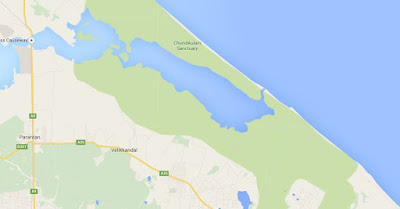
East Coast Road in Jaffna Peninsula

Chundikulam Sanctuary Lagoon
Trying to leave the Jaffna Peninsula travelling by the East Coast Mullaithivu road thru the Chundikulam Sanctuary.

Bad news: Maybe in SUV with a snorkel or trail motor bike.  As Olivier and Benoît (from France) say: The lagoon of Chundikulam Sanctuary, we have to pass in the ocean, no beach road at this season (NE Monsoon).
Maybe possible to cross in May-Oct season.
Related: Crossing Kokilai Lagoon


https://www.google.lk/maps/place/Jaffna/@9.4605176,80.5491221,12z/data=!4m2!3m1!1s0x3afe53fd7be66aa5:0xc7da0d9203baf512?hl=en


Friday, March 18, 2016

Flawed Analysis: Prof. Dharmawardana on CKDu and Glyposate

Prof. Dharmawardana has an article that dismisses links between CKDu, glyphosate and chemical fertilizers.  However this analysis is severely flawed.

To quote Prof. Dharmawardana:

New Zealand is one of the biggest users of synthetic fertilizer, applying 1700 kg/hectare in 2012. Other comparative figures (per hectare, World Bank data) are, Malaysia,1600, Singapore 3400, Holland 300, India 165, Sri Lanka 198, Nicaragua 50. Both Nicaragua and Sri Lanka have chronic kidney disease of unknown origin (CKDu). There are similar trends for glyphosate (herbicide) use. While Nicaragua uses very little fertilizer and glyphosate, New Zealand which uses more than 34 times has no CKDu.
The proposed link (e.g. Jayasumana et al (2014) ) is between hard (Ca++ and Mg++) ground water used for drinking and glyphosate and chemical fertilizer use in surrounding areas.

The flawed analysis of Prof. Dharmawardana ignores
a) New Zealand has high rainfall and rural communities use rain water collected from roofs for drinking purposes.
b) Sri Lanka does not have a CKDu problem is the wet zone.
c) Jaffna which has hard ground water has low incidence of CKDu because agro chemicals were prohibited during the war.

Related Links
Chronic Kidney Disease: Cause Hard Water + Heavy Metals + RoundUp
Groundwater Depletion, Chronic Kidney Disease (CKDu) and Jaffna .


Monday, March 14, 2016

Is Ranil Wickremesinghe planning to send Colombo Garbage to Wilpattu

Kala-Oya/Lunu-Ela 200m away from proposed Garbage site
The Garbage in Colombo is becoming a political nightmare and is standing in the way of the Colombo Megalopolis project. Is Prime Minister Ranil Wickremesinghe advocating the move of the Colombo Garbage to the Holcim Aruwakkalu Old Quarry 200m from the Wilpattu National Park border.

The surrounding area of the proposed garbage site is pristine Mangroves and the beautiful Kala-Oya. Maybe the animals and fish do not have a vote, whereas Kolonnawa is a large vote bank for Ranil Wickremesinghe. The idea is that garbage sites should be in less populous areas – not in residential areas. i.e. Send the garbage to where there are more animals than people.

The Colombo Garbage to Wilpattu has been revived and is about to be approved. Rumors have it that the Wildlife Dept was obstructing the approval. A change in Wildlife Dept leadership is planned and will approve the Garbage site adjacent to Wilpattu National Park and the beautiful Kala-Oya. Large amount of toxic chemical leachate (7 bowser loads, every day for at least 20 years) will end up in the Kala-Oya and the Puttalan Lagoon which is a enclose environment. (See Colombo Garbage to Wilpattu and Update: Colombo Garbage to Wilpattu and Suggestions: Colombo Garbage to Wilpattu)

The reason for all the chemical ending in the Lunu-Oya and Kala-Oya is because the underlying ground is limestone and very porous.  Additionally the limestone and the High Density Polyethylene (HDPE) will crack because of blasting in the nearby active Holcim Quarry.


However, disposal to the Lunu Oya is not a good solution due to its almost stagnant nature. Furthermore, the proposed effluent treatment plant is likely to fail, with no mechanism to remove colloidals, COD and heavy metals, etc.

Therefore, releasing the effluent from the treatment plant to the Lunu Oya would result in intense pollution especially during the drier spells when discharge is very low due to high evapotranspiration and the leachate pollution would even spread to upstream areas (up to the zone of saline water intrusion) during the high tides.

The reduced, total organic carbon (TOC) rich mangrove sediments would become a crucial sink for the heavy metals due to adsorption and sulfate reducing bacteria (SRB) mediated dissimilatory SO42- reduction mechanisms; however, ingestion of contaminated sediments/detritus matter by bottom dwelling fauna wouldultimately result in bioaccumulation in higher trophic levelfaunal species such as Birds of Prey which are found inplenty due to the close proximity of the landfill site to the Wilpattu National Park (about 1.5 km to the boundary of the park, which is located towards the East of the landfillsite), one of Sri Lanka’s Ramsar wetlands. Also during high tidal events when there is saline water intrusion, there could be desorption of sediment adsorbed metals due to intense competition between Na? ions and metal ions for adsorption sites, resulting in an increased likelihood of the bioavailability of desorbed metals to fish, etc. in the long run considering that the Project area experiences a drier climate

However, operation of the nearby potential quarry sites (i.e., the Eluwankulama Forest; Fig. 1) for limestone extraction by Holcim (Lanka) Ltd (for cement production) could pose a danger to the single composite liner. This is because higher peak particle velocities due to the usage of detonators and charging drilled holes with ammonium nitrate/fuel oil and dynamite may rupture the HDPE liner and perhaps the soil bentonite layer too, ultimately leading to groundwater contamination.
Map of Kala Oya and Garbage site. Click on Image for Google Maps

Friday, October 16, 2015

Suggestions: Colombo Garbage to Wilpattu.

Perth, Australia. The materials used for land reclamation,
included general household rubbish.
Opposing or being critical of a project should be accompanied by alternative suggestions.

Obviously I am critical of Garbage of Colombo shipped to a Landfill in the Wilpattu Buffer zone or for that matter to any interior part of the Sri Lanka.  This is simply because the large amount of toxic chemical leachate (7 bowser loads, every day for at least 20 years) is trapped in an enclosed environment. (See Colombo Garbage to Wilpattu and Update: Colombo Garbage to Wilpattu)

In the case of the Wilpattu Buffer zone site, the leachate is trapped in the Kala-Oya/Lunu-Ela Estuary Complex and the Puttalam Lagoon.  Tidal currents are clockwise (Coriolis force) in the Northern hemisphere.  That means all the toxic chemicals are going to flow toward Puttalam town, and the longer the water stays (residence time), more of the chemicals will settle on to the bottom.  These will then eaten by various organisms (shrimp etc) and end up in the bigger fish (food chain).  The worst case is that all the chemicals use up all the oxygen (eutrophication) in the south end of the Lagoon.  Then all fish will die, the lagoon covered with algae and a stink to high heaven (think Bolgoda in Colombo).

Any landfill site in the interior of Sri Lanka will similarly trap the leachate in groundwater sources for years in the future.

So what are my suggestions.
  • Use the garbage to create Landfill for the proposed Colombo Port City

    I am well aware that the leachate is going into the ocean. However, it is a much better choice than the leach contaminating and getting concentrated in closed environments such as Kala-Oya-Puttalam Lagoon system or groundwater in the interior of the country. 

    JFK and La-Guardia Airports in NYC were built using garbage as Landfill. However, they are an environmental disaster a) because wetlands were filled up b) as the leachate continues to seep into enclosed water bodies.  In the case of JFK Airport into Jamaica Bay and La-Guardia into Western Long Island Sound.

    Japan and the Netherlands and Perth Australia, seem to have better results, i.e. lesser concentration of leachate because the land reclamation has been bordering in open ocean. Also see Land Reclamation for more examples.
  • Create blocks of garbage and cement to create artificial reefs and sea -walls where erosion is an issue.
    Charitha Pattiarachi
    of Uni of Western Australia created an artificial reef for surfing at Cable Station near Perth (I like the "In her study, Pattiaratchi", presumably because of the Charitha.  Pattiaratchi is 6 foot plus, Royal College swimmer and was a bouncer in a London Night Club, while a university student).  

    Imagine that, a surfing spot off Colombo Port City.

  • Use waste plastic and burned garbage to create plastic lumber.

    See Waste Reduction and Management Institute at School of Marine and Atmospheric Sciences at Stony Brook University for recycled plastic lumber and construction material comprised of municipal solid waste combustor ash and concrete.  They have been doing this since 1987.